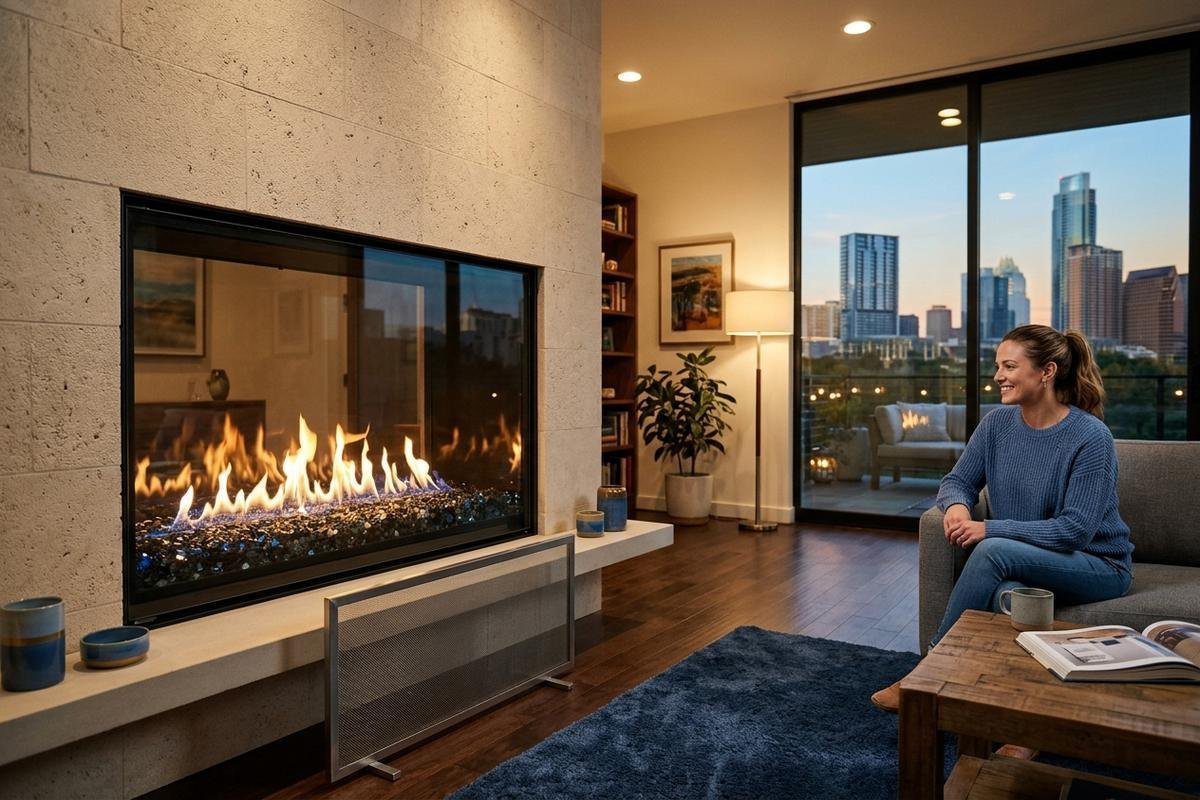
Winter in Austin, TX brings sudden, unexpected cold snaps. Therefore, local homeowners love using their fireplaces during winter. However, you must clean and inspect chimney systems first.
A proper chimney cleaning service removes dangerous buildup quickly. In fact, annual maintenance prevents serious home fires. You will protect your family and improve indoor air quality.
Our 2026 guide covers everything you need to know. As a result, you can enjoy a safe, warm home.
The Importance of Chimney Maintenance for Austin Homeowners
Austin chimney safety is vital for every local property. Over time, burning wood creates a sticky, flammable residue. This dangerous substance is known as creosote.
Consequently, thick creosote buildup causes severe structural damage. It also significantly increases your risk of chimney fires. You must schedule regular fireplace maintenance to avoid disasters.
In 2026, Central Texas weather remains incredibly unpredictable. For example, sudden freezes make homeowners rely on fireplaces heavily. Dirty flues push harmful smoke back into your living space.
Furthermore, bad air quality triggers allergies and respiratory issues. A blocked flue traps carbon monoxide inside the house. Therefore, a clean chimney ensures safe indoor air quality.
Similar to air duct cleaning, chimney care requires consistency. You should never skip this important annual safety task.
Fireplaces add great value to any Austin, TX property. Yet, many buyers overlook chimney health during home inspections. Consequently, new owners inherit severe structural and safety problems.
Wood burns inefficiently when the chimney draft is poor. A clogged flue restricts the vital flow of oxygen. As a result, your fires will produce excessive smoke.
This smoke carries harmful fine particulates into your lungs. Asthmatic family members will suffer the most from this. Therefore, annual sweeps are crucial for personal health.
Essential Tools to Clean and Inspect Chimney Systems
Proper creosote removal requires very specific maintenance equipment. Specifically, you need a heavy duty wire chimney brush. A six inch wire brush works best for clay flues.
In addition, you must use flexible fiberglass extension rods. These rods help push the brush down the tall flue. Meanwhile, a strong shop vacuum collects the falling soot.
Safety gear is absolutely critical for this messy job. You must wear specific protective items to avoid harm.
- A tight fitted respirator mask
- Clear safety goggles for eyes
- Thick protective work gloves
Homeowners should always follow strict safety guidelines during inspections. Ignoring these rules can lead to serious injuries.
Furthermore, you need heavy drop cloths for your floors. Fine soot travels easily through the air and settles. Consequently, these cloths protect your expensive rugs and furniture.
A stiff hand brush is perfect for the smoke shelf. The smoke shelf collects a massive amount of debris. In fact, ignoring this spot causes terrible foul odors.
Additionally, a sturdy ladder is essential for roof access. You must secure the ladder properly before climbing up. A fall harness provides an extra layer of protection.
Step-by-Step Guide: How to Clean and Inspect Chimney Properly
Every homeowner in Austin, TX should understand this process. However, climbing a steep roof is very dangerous work. You should only proceed if you feel completely comfortable.
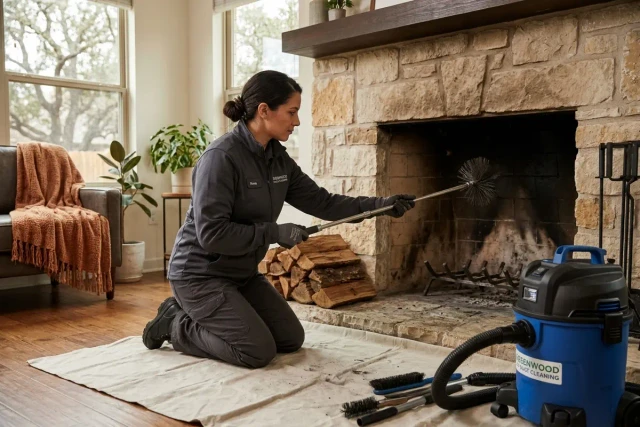
Step 1: Visual Inspection for Creosote and Blockages
First, grab your flashlight and open the fireplace damper. Shine the light up into the dark chimney flue.
Inspectors must look for three specific types of buildup.
- Flaky soot deposits
- Hard crunchy creosote
- Shiny glaze creosote
That shiny glaze is highly combustible stage three creosote. In fact, a normal brush cannot remove this glaze. You will need special chemical treatments for this stage.
Next, check for bird nests or trapped animal debris. Animals often seek shelter inside warm Austin chimneys. Consequently, these blockages trap toxic smoke inside your home.
Pests can also ruin your nearby attic insulation quickly. Removing these nests prevents larger pest infestations.
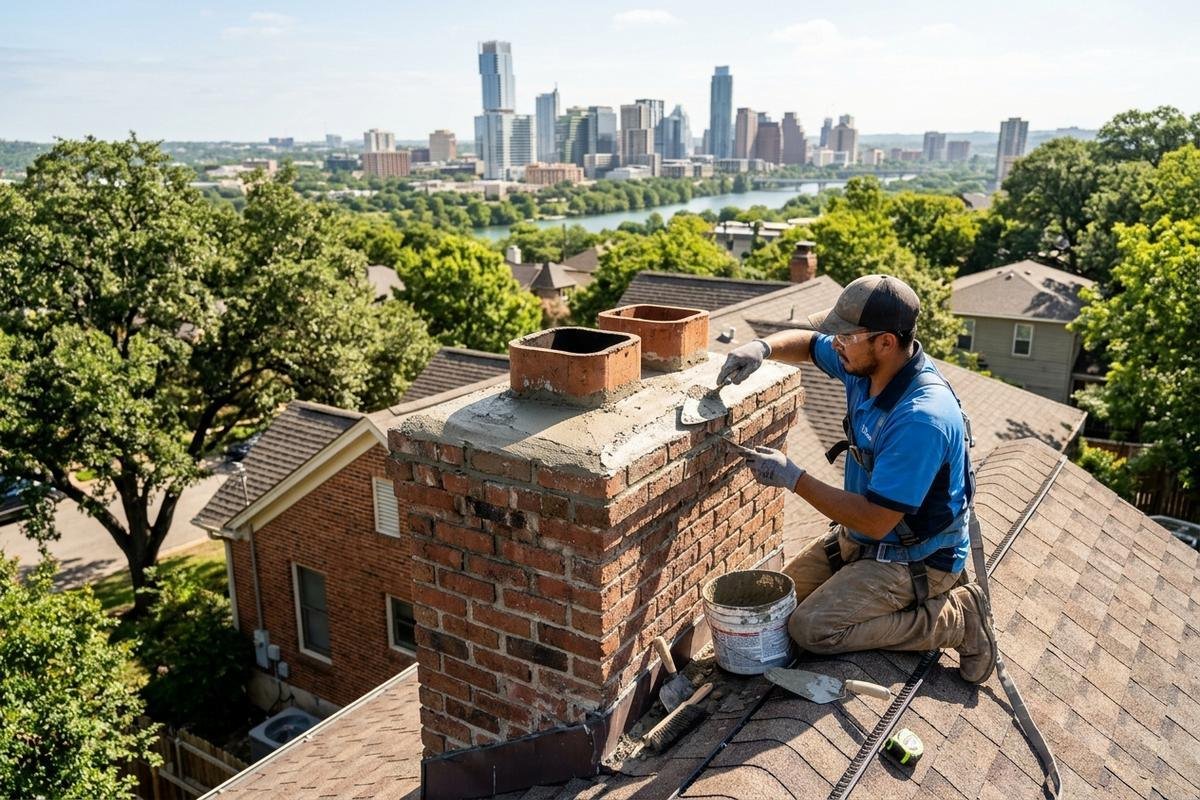
Sometimes, you might find structural damage during this step. Look for missing mortar joints inside the firebox area. Loose bricks mean you need immediate professional masonry repair.
Furthermore, check the damper mechanism for proper smooth operation. A rusted damper will not close tightly at all. As a result, your home will lose expensive heat.
Step 2: Cleaning the Flue and Firebox
Seal the front of the fireplace with heavy plastic. Cut a small slit for your vacuum hose. As a result, soot will not ruin your living room.
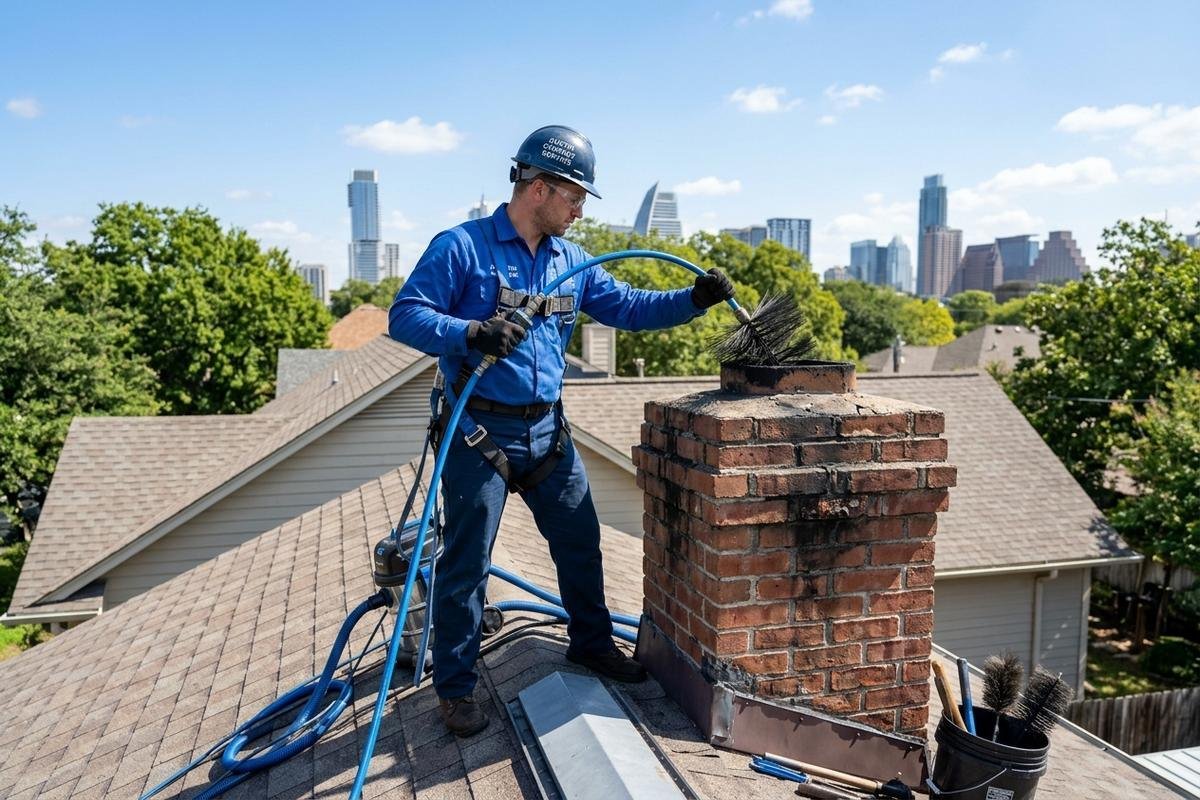
Climb to the roof and remove the chimney cap. Then, attach your wire brush to the first rod. Scrub the flue walls using vigorous up and down motions.
Add another rod and continue scrubbing further down. Eventually, you will reach the bottom smoke shelf. Afterward, return inside to clean the lower firebox area.
Use your shop vacuum to gather all fallen debris. You must also scrub the firebox walls with a smaller brush. This ensures a completely safe environment for future fires.
Chemical sweeping logs are not a substitute for brushing. These logs only loosen up the existing sticky creosote. You still must scrub the walls manually to clean.
Always wear your respirator mask during this exact step. The disturbed soot will float directly into your face. Inhaling these toxic particles causes serious lung irritation quickly.
Step 3: Checking the Cap and Exterior Masonry
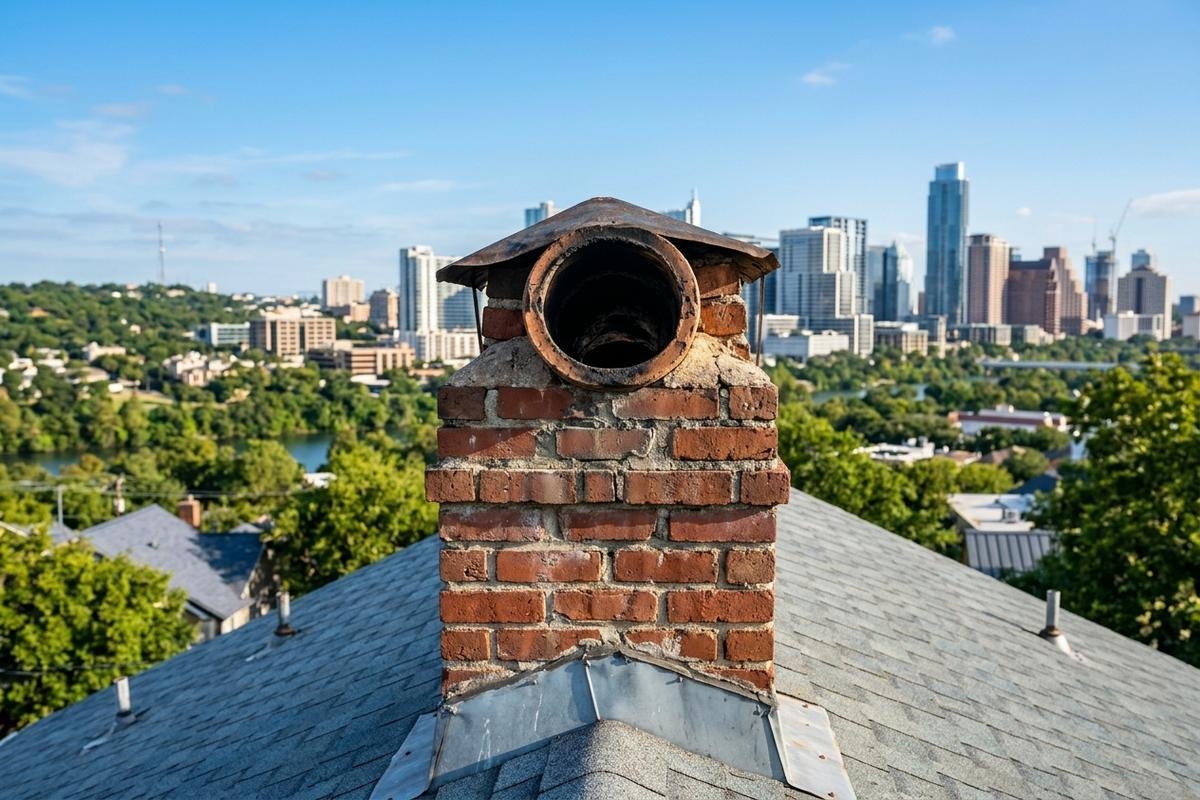
The chimney cap keeps rain and animals outside. Therefore, you must ensure the metal mesh remains intact. Replace the cap immediately if you spot severe rust.
Next, inspect the exterior brickwork for loose crumbling mortar. This crumbling is known as spalling in the industry. In fact, water damage causes most masonry failure.
Just like duct repair, fixing small cracks saves money. Ignoring masonry issues leads to massive rebuilding costs later. Always apply a waterproof sealant to protect the bricks.
Look closely at the concrete crown near the cap. The crown directs heavy rain away from the flue. However, intense summer heat causes this concrete to crack.
You can seal hairline cracks with specialized crown repair. This flexible sealant prevents water from freezing and expanding. Ultimately, proactive maintenance extends the life of your chimney.
Local Austin HVAC Codes and Chimney Regulations
Austin homeowners face very unique climate challenges every year. Specifically, Central Texas humidity accelerates rust on chimney caps. This moisture also weakens older masonry much faster.
Travis County frequently issues strict burn bans during droughts. During a burn ban, you cannot use outdoor fire pits. However, indoor fireplaces are usually exempt from these rules.
Even so, you must follow all 2026 safety regulations. Local building codes require proper clearances around wood stoves. Furthermore, you must have working smoke detectors nearby.
Ignoring these codes can void your home insurance policy. A proper chimney sweep Austin TX residents trust helps you. They ensure your system meets all current local standards.
Historic homes in Austin require special attention during inspections. Many older neighborhoods feature unlined brick chimney systems today. An unlined flue is incredibly dangerous for modern fires.
Current codes mandate installing a stainless steel flue liner. This metal liner contains the extreme heat very safely. Therefore, it protects the surrounding wooden house framing completely.
Professional vs. DIY: When to Call an Austin Chimney Sweep
Many homeowners wonder about the average chimney inspection cost. DIY cleaning saves money but involves major safety risks. For example, falling off a steep roof is fatal.
Moreover, untrained eyes easily miss hidden structural cracks. A professional chimney sweep has specialized training and tools. They use high tech cameras to scan the flue.
In 2026, a basic professional inspection costs around $150. Deep cleaning treatments will add more to that price. Ultimately, this small investment protects your most valuable asset.
Professional dryer vent cleaning works exactly the same way. Experts remove hidden fire hazards better than amateur attempts. Therefore, hiring a pro is always the smartest choice.
Professional sweeps provide official documentation for your insurance company. This paperwork proves you maintained the property safely. In contrast, DIY cleaning offers no official legal proof.
If a fire occurs, insurance adjusters will demand records. Without professional receipts, they might deny your fire claim. Consequently, paying a professional sweep saves you severe financial ruin.
Frequently Asked Questions
1. How often should I clean and inspect my chimney in Austin, TX?
You should schedule a professional sweep at least once annually. Always do this before the winter season begins. This ensures no debris or creosote has accumulated safely.
2. What is the average chimney inspection cost in Austin for 2026?
Costs vary based on the required level of inspection. For 2026, professional inspections in Austin range between $150 and $400. Level two or three inspections cost slightly more.
3. Does my Austin home insurance require an annual chimney inspection?
Many policies require documented maintenance to cover fire claims. You should check your specific 2026 policy details carefully. Without proof, insurers might deny your coverage.
4. What are the signs that my chimney needs cleaning immediately?
Watch for heavy smoke filling your indoor living space. You might also notice a campfire smell when not in use. Visible oily soot inside the flue requires immediate attention.
5. Are there specific Austin regulations for wood-burning fireplaces?
Austin follows international residential codes for all fire safety. However, local burn bans can affect outdoor wood burning. You must also manage local moisture levels to prevent rust.
Ready to ensure your fireplace is safe? Contact Greenwood Air Duct Cleaning today for reliable service to clean and inspect chimney systems in Austin, TX. Schedule your 2026 appointment now!