The most common signs of a clogged dryer vent include clothes taking longer to dry, an unusually hot dryer, burning or musty odors, weak airflow from the outdoor vent, excess lint around the appliance, and a hot or humid laundry room. These warning signs often appear gradually, causing homeowners to blame the dryer instead of the exhaust system. However, restricted airflow can force the appliance to work harder, trap heat and moisture, and create a serious safety concern. The U.S. Fire Administration reports that failure to clean was the leading factor contributing to the ignition of home clothes-dryer fires from 2018 through 2020. Recognizing the problem early can help protect your home, improve dryer performance, and prevent avoidable repairs.
Why a Clear Dryer Vent Matters
A dryer must move moisture, heat, and lint through an exhaust duct and release them outside. When the vent is clear, warm, moist air leaves efficiently, and clothing dries within a normal cycle. When lint, debris, a crushed hose, or an animal nest restricts the duct, humid air remains trapped.
As airflow falls, temperatures rise, moisture stays inside the drum, and each load takes longer. The U.S. Consumer Product Safety Commission warns that lint buildup can block airflow, create excessive heat, and result in a fire in some dryers.
Clothes Take Longer Than Normal to Dry
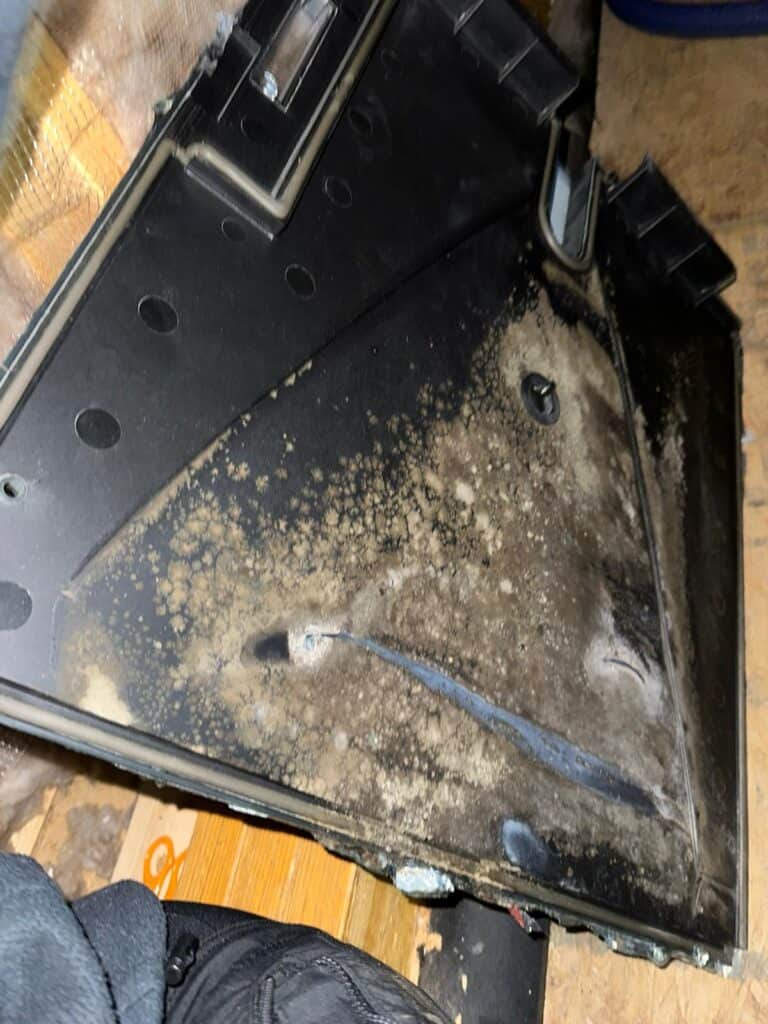
Long drying time is often the first noticeable warning. A load that once dried in one cycle may remain damp, especially around towels, pockets, waistbands, and heavier fabrics. You may begin adding extra time or running the same load twice.
This happens because the dryer cannot remove moisture without steady exhaust airflow. Maytag identifies longer-than-normal drying time as a common indicator of restricted household venting.
Before assuming the heating element has failed or buying a new appliance, have the exhaust system inspected. Professional Dryer Vent Cleaning can remove compacted lint and hidden obstructions from the full vent path rather than cleaning only the area immediately behind the dryer.
The Dryer Feels Unusually Hot
A working dryer will naturally feel warm, but it should not become excessively hot. If the top, sides, door, or control area feels much hotter than usual, the vent may not be releasing heat properly.
Restricted airflow traps heat, strains internal parts, and may trigger an automatic shutdown. Stop using the dryer if it becomes extremely hot, produces smoke, or gives off a strong burning odor. Arrange an inspection before using it again.
An overheating appliance should never be treated as a minor inconvenience. Even when the dryer continues operating, the additional temperature can place unnecessary stress on its components and increase the risk of damage.
A Burning Smell Appears
A burning smell is one of the most urgent signs of a clogged dryer vent. Lint can collect in the lint-trap housing, exhaust connector, wall duct, or dryer cabinet. When airflow is restricted, temperatures may rise around that buildup.
The odor may resemble scorched fabric, hot dust, melting material, or smoke. Turn the dryer off rather than attempting another cycle. Electrical problems, a damaged belt, motor trouble, or a trapped item can cause similar symptoms, so a qualified professional should identify the source.
Do not attempt to hide the odor with fragrance or assume it will disappear after the appliance cools. A recurring burning smell indicates a problem that should be investigated before the dryer is operated again.
The Laundry Room Becomes Hot or Humid
Your laundry area should not feel like a sauna after every load. Excess heat or humidity may indicate that moist exhaust air is leaking or backing up instead of moving outdoors.
You may notice condensation, dampness behind the appliance, or a heavy feeling in the air. A disconnected or damaged hose can release lint and moisture directly into the room, while a severe blockage may push warm air backward.
Because airflow problems can affect more than one part of the home, Greenwood Duct Cleaning also offers Air Duct Repair & Replacement for damaged ductwork and an Air Duct Cleaning Service for homeowners concerned about dust and debris in their HVAC system.
Weak Airflow Comes From the Outdoor Vent
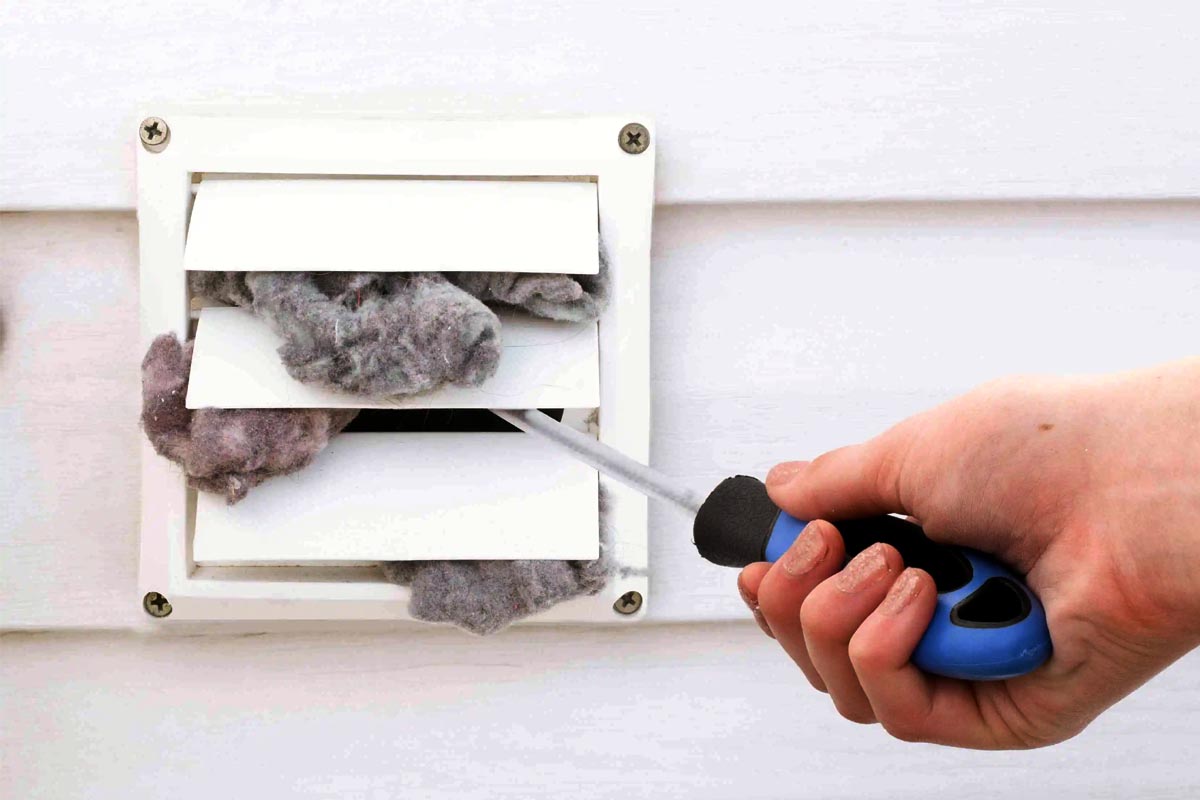
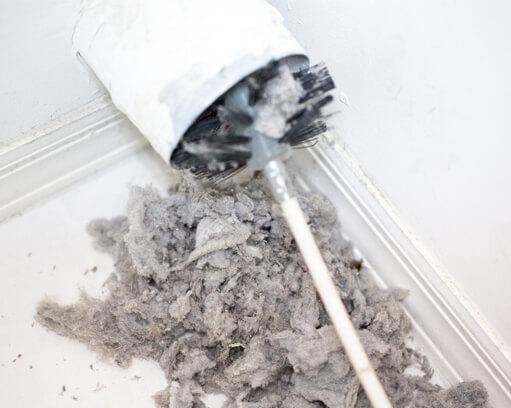
The exterior vent provides a useful clue about the condition of the system. While the dryer is operating, the outside flap should open and release a steady stream of warm air. If the flap barely moves, stays closed, or releases weak airflow, the exhaust path may be restricted.
Lint may be packed near the opening, but the clog can also sit deeper inside a wall or ceiling duct. Leaves, dirt, and nesting material can block the termination. A damaged or stuck exterior flap may also interfere with proper ventilation.
Avoid installing fine mesh over the outlet because it can catch lint and restrict exhaust. The vent termination must allow warm air, moisture, and loose lint to leave the home freely.
Lint Collects Around the Dryer
The lint screen captures much of the material released from clothing, but it does not catch everything. If lint collects behind the dryer, around the hose connection, near the door seal, or on nearby surfaces, there may be a leak or blockage.
Visible lint may indicate a loose connection or back pressure inside the system. Surface cleaning will not remove hidden buildup, and a clean lint screen does not guarantee that the full exhaust route is open.
The lint filter should still be cleaned before or after every load. This simple habit reduces the amount of material entering the exhaust system, but it does not replace periodic inspection and cleaning of the vent itself.
Clothes Have a Musty Odor
A clogged vent can trap moisture long enough to create a stale or musty smell. Freshly washed clothing may come out warm but still smell damp, and the odor may return even after the dryer drum is wiped clean.
Damp lint and residue can remain inside long ducts, sagging sections, or poorly installed connectors. Moisture may also collect in low points of the vent, creating an environment where unpleasant odors can develop.
If the odor smells burned rather than musty, stop using the dryer immediately. Homeowners concerned about wider air-quality issues may also explore UV Light & Air Purification as part of a broader indoor comfort plan.
The Dryer Displays a Vent Warning
Many modern dryers include a check-vent light, airflow indicator, or error code. This warning may appear when the appliance detects poor exhaust performance or abnormal heat. It should not be ignored simply because the dryer continues to run.
Clean the lint screen, inspect the connector for kinks or crushing, and check the outside flap for visible blockage. If the warning returns, the restriction may be farther inside the duct and require professional equipment.
Resetting the appliance without correcting the airflow problem only removes the alert temporarily. The restriction can continue affecting drying performance and placing additional strain on the appliance.

The Dryer Shuts Off Early
An overheating dryer may stop before clothes are dry. It might restart after cooling, making the problem seem random. In reality, repeated shutdowns may be the appliance protecting itself from excessive internal temperature.
A clogged vent is not the only possible cause, but it should be checked before expensive components are replaced. An inspection can help determine whether the problem comes from restricted airflow, an appliance failure, or a combination of both.
If home cooling equipment is also old or unreliable, Greenwood Duct Cleaning provides AC replacement alongside its broader home-comfort solutions. The company’s complete Services page provides an overview of its available services.
What Causes a Dryer Vent Clog?
Lint accumulation is the main cause, but long duct runs, multiple elbows, crushed connectors, rough surfaces, and sagging sections can trap fibers and slow airflow.
Frequent loads, bulky fabrics, and pet bedding may accelerate buildup. Exterior debris, nests, and poor installation can also create recurring restrictions. A vent with several turns may collect lint faster than a short, straight exhaust path.
Moving the dryer too close to the wall can crush or bend the connector. This reduces the available space for air to travel and creates another location where lint can become trapped.
Preventive maintenance matters in other home systems as well. Regular Chimney Cleaning helps address soot and debris in fireplace systems, while properly installed Attic Insulation can support indoor comfort and reduce unnecessary pressure on heating and cooling equipment.
Can You Clean a Clogged Dryer Vent Yourself?
Homeowners can handle basic maintenance such as cleaning the lint screen, vacuuming accessible lint, and checking the outside flap. Before moving or disconnecting an electric dryer, turn it off and unplug it. Gas dryer connections require additional caution and should not be disturbed without the right knowledge.
A short, accessible connector may be manageable with proper tools. However, vents running through walls, ceilings, attics, or roofs can hold lint far beyond reach. Incorrect tools may compact the clog, damage the duct, or become stuck.
DIY cleaning may also leave sections of the vent untouched. Removing lint from the connector behind the dryer does not necessarily clear the duct hidden inside the home.
Professional cleaning is the safer choice when drying time remains long, airflow is weak, the vent has a complex route, or there is any sign of overheating or burning.
How Professional Dryer Vent Cleaning Helps
Professional service addresses the exhaust route from the dryer connection to the exterior termination. A technician can inspect the vent configuration, identify restrictions, loosen compacted lint, remove debris, and confirm that air is moving outside.
After cleaning, homeowners may notice faster drying, less heat, and more consistent operation. Cleaning cannot repair failed appliance components, but it can eliminate a common cause of poor performance.
A professional inspection may also uncover damaged connectors, disconnected joints, poor vent routing, or an exterior outlet that does not open correctly. Correcting these issues can help prevent the blockage from returning too quickly.
Greenwood Duct Cleaning serves homeowners who need dryer vent inspection and cleaning in the Austin area. Scheduling service when warning signs first appear is safer than waiting for the dryer to stop working completely.
Final Thoughts
The signs of a clogged dryer vent are usually easy to recognize once you know what to watch for. Slow drying, excess heat, burning or musty odors, visible lint, weak outdoor airflow, vent warnings, humidity, and unexpected shutdowns all deserve attention. No single symptom proves that the vent is blocked, but several signs appearing together strongly suggest restricted airflow.
Clean the lint screen with every load, keep the area around the dryer clear, and periodically check the outdoor vent while the appliance is running. When the vent is difficult to access, or the symptoms continue, contact Greenwood Duct Cleaning for a professional inspection. Timely cleaning can improve drying performance, reduce unnecessary strain on the appliance, and help protect your home from preventable heat and lint hazards.