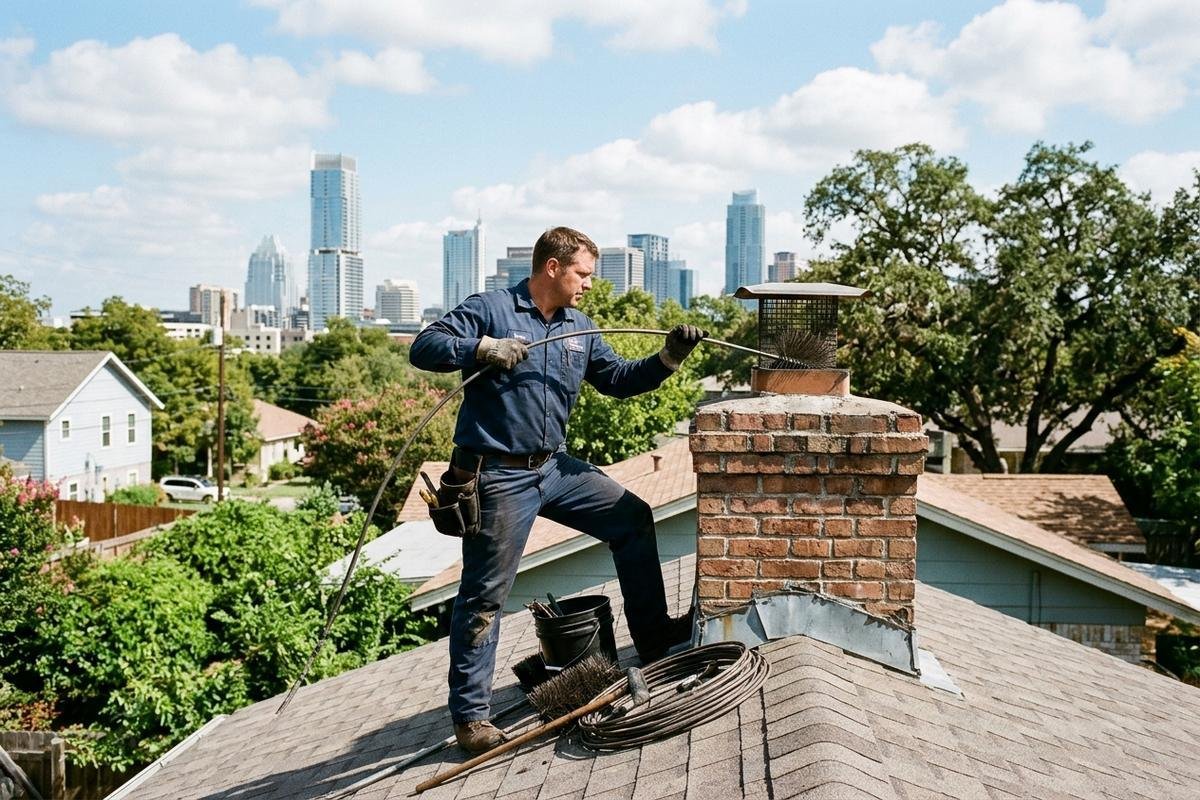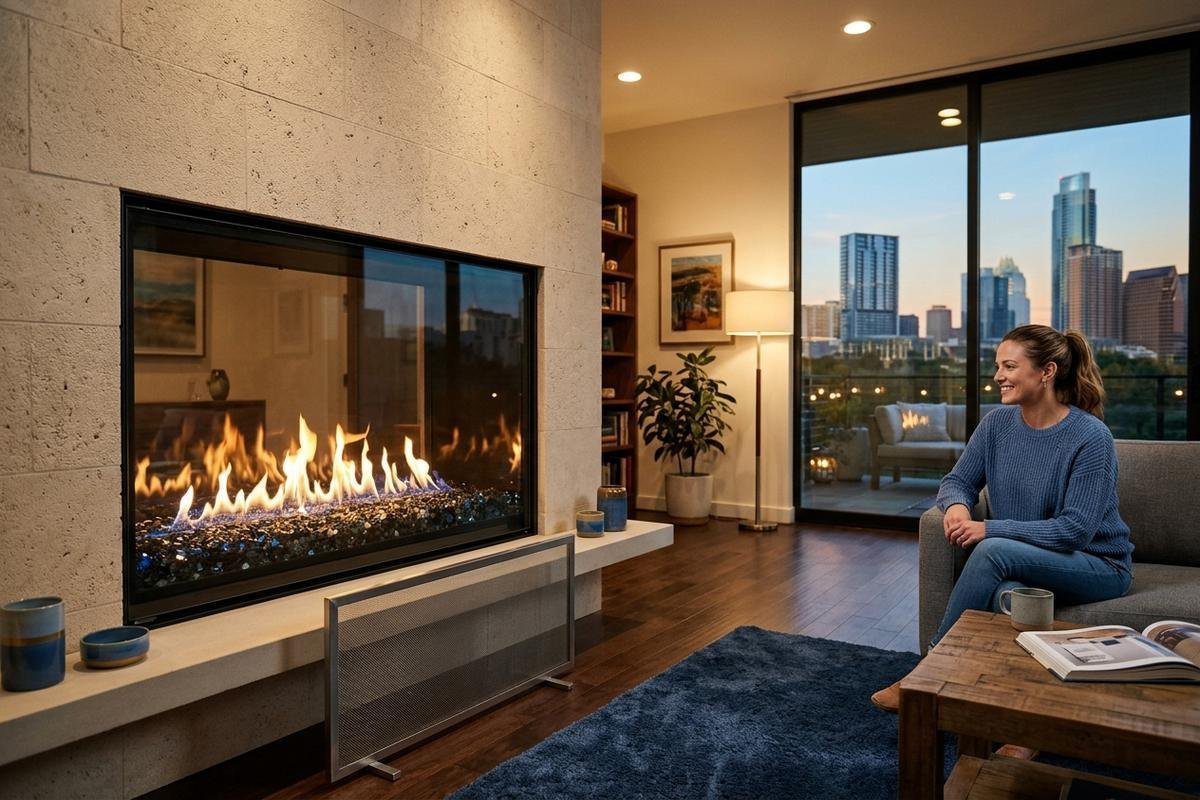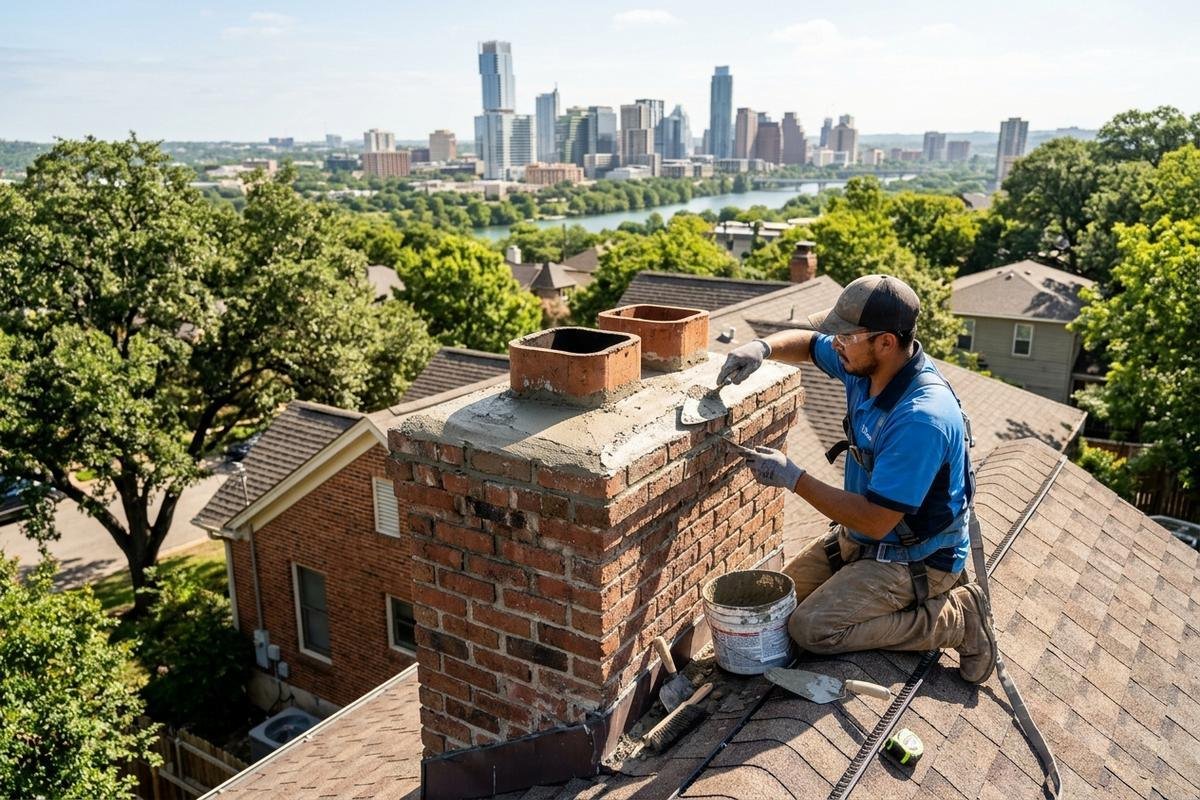
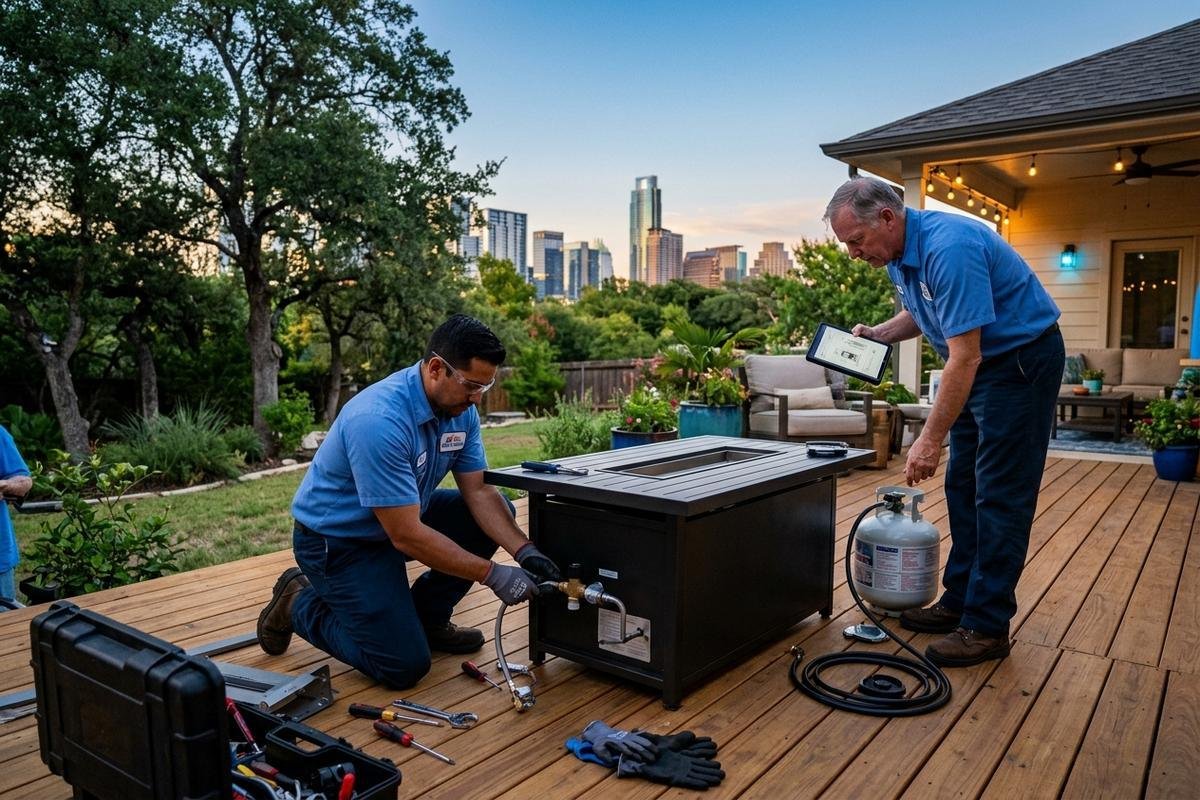
Winter nights get surprisingly cold here in Central Texas. Because of this chill, many homeowners explore installing a propane fireplace. You might want reliable warmth during unexpected grid outages. In fact, Austin home heating 2026 trends favor independent gas units. They offer incredible heating efficiency. You must prioritize safety first. Start by booking a chimney cleaning appointment. A clean flue prevents serious fire risks. This guide will walk you through the entire setup process.
Planning Before Installing a Propane Fireplace in Austin
Every successful home upgrade begins with a solid plan. You need to evaluate your living space carefully. Many older homes in the Zilker neighborhood lack gas lines. As a result, you must budget for new pipe routes. Propane offers a fantastic alternative to natural gas. It burns hotter and produces fewer emissions. However, you need a dedicated storage tank outside.
City regulations dictate tank placement distances from your property line. You should measure your yard space before buying anything. A local expert can assess your property layout quickly. They will recommend the best tank size for your home. Meanwhile, consider the aesthetic impact on your living room. You want the unit to match your interior design perfectly.
Homeowners often underestimate the required clearance zones. Keep flammable materials far away from the heat source. Furniture must sit at least three feet from the glass. That said, a well-placed unit creates a stunning focal point. You will love the cozy atmosphere during December freezes. Planning ahead saves you precious time and money.
Because preparation matters, always consult a professional designer early. They help you avoid costly structural mistakes later. Your dream living space requires careful coordination.
Austin HVAC Codes and Safety Regulations for 2026
Navigating local building codes can feel overwhelming at first. You must secure the right permits before starting work. The city requires a strict mechanical permit for this project. Because safety matters most, inspectors verify every connection point. Austin fireplace installation rules strictly prohibit DIY gas line work. You must hire a licensed plumber for that step.
Ventilation standards changed significantly this year. The 2026 building codes require dual-sensor carbon monoxide detectors nearby. In fact, you cannot pass inspection without them. Direct-vent models need specific wall clearances to operate safely. Inspectors will check the exterior termination cap closely. It must sit a safe distance from operable windows.
You should review safety standards from trusted industry authorities. For example, you can check these safety guidelines online. They outline proper pressure testing protocols for propane lines. A certified technician will pressure test your system. This step ensures zero leaks exist behind your walls. You can relax knowing your family remains totally safe.
Therefore, never skip the final municipal inspection phase. An official red tag will halt your home sale later. Compliance brings true peace of mind.
How to Start Installing a Propane Fireplace: Step-by-Step
Breaking the project into smaller phases makes it manageable. You can tackle the design and selection phases yourself. However, professionals must handle the technical connections. You will need patience during the scheduling process. Contractors stay very busy during the autumn rush. Therefore, you should start this project in early spring.
Selecting the Ideal Location in Your Austin Home
When installing a propane fireplace, finding the perfect spot requires thought. You must consider both visual appeal and structural reality. Interior walls often complicate the ventilation routing process. Exterior walls provide the easiest path for direct venting. As a result, you save money on labor costs.
Review potential locations using these simple criteria:
- Distance from flammable furniture or drapes
- Access to an exterior wall for venting
- Structural floor support for heavy models
- Clearance from normal household foot traffic
Always check for hidden obstacles behind the drywall. Plumbers might find water pipes or electrical wires inside. You want to avoid expensive relocation fees if possible. A simple stud finder helps you map the wall structure. Careful planning prevents major headaches later on.
Meanwhile, think about your daily walking paths. You do not want a bulky hearth blocking the hallway. Space planning ensures a comfortable living environment.
Understanding Venting Requirements and Airflow
Proper ventilation keeps your indoor air healthy and breathable. Propane combustion creates moisture and trace gases. You must exhaust these byproducts outside immediately. Vent-free models exist, but they have strict room limits. Therefore, most local experts recommend direct-vent systems instead.
A direct-vent system pulls outside air for combustion. It then expels the exhaust through a separate pipe chamber. This sealed process prevents cold drafts from entering your home. Meanwhile, you must maintain your whole house ventilation network. Consider scheduling air duct repair if your system struggles. Good airflow prevents heat from trapping in one room.
The exterior vent cap needs open space to function. You cannot hide it under a low deck or porch. Shrubs and bushes must stay two feet away from it. In fact, blocked vents cause dangerous carbon monoxide buildup inside. Regular landscaping maintenance keeps this area clear and safe.
As a result, you enjoy a worry-free winter season. Clean air exchange protects your long-term health. Never compromise on proper ventilation design.
Coordinating with Gas Professionals for Line Safety
Connecting the fuel source requires intense precision and care. A licensed professional must run the corrugated stainless steel tubing. This flexible pipe snakes through your attic and walls easily. However, Central Texas features shifting clay soils underneath foundations. This ground movement can stress rigid gas pipes over time.
This connection process involves three critical safety steps:
- Routing the flexible stainless steel tubing
- Installing an accessible emergency shutoff valve
- Performing a strict pressure manometer test
Plumbers use flexible connections to absorb these tiny shifts. They also install an accessible shutoff valve near the unit. You must know exactly where this emergency valve lives. If you smell gas, you turn it off immediately. Gas fireplace safety depends on quick reactions and good habits.
After connecting the lines, the technician performs a manometer test. This device measures gas pressure with incredible accuracy. It detects microscopic leaks that soap bubbles might miss. Once the test passes, they connect the burner pan. Your new heating source is finally ready for operation.
That said, you should always keep a fire extinguisher nearby. Safety protocols save lives during unexpected emergencies. Always respect the power of combustible fuels.
Maintaining Your New System for Indoor Air Quality
After installing a propane fireplace, your new unit requires care. Dust and pet dander settle inside the artificial logs constantly. This debris creates terrible smells when you ignite the burner. As a result, you must clean the interior glass annually. You should use a specialized gas fireplace glass cleaner.
Never use standard window cleaner on the hot ceramic glass. Ammonia weakens the glass structure over time. Meanwhile, you must inspect the exterior vent cap for blockages. Birds love building nests inside warm exhaust pipes during winter. A blocked pipe forces dangerous fumes back into your house.
Good maintenance extends beyond the unit itself. Your home needs clean air circulation to distribute heat evenly. You should book an air duct cleaning before winter arrives. Clean ducts help your primary HVAC system work less. Proper attic insulation also traps the generated heat inside longer.
For example, upgraded insulation stops heat from escaping through the roof. You will notice lower utility bills immediately. A holistic approach to heating yields the best results.
Common Austin Fireplace Installation Challenges
When installing a propane fireplace, Central Texas presents unique hurdles. Our humid climate often causes condensation inside vent pipes. This moisture can drip back down into the firebox. Therefore, installers must angle horizontal vent runs slightly downward outside. This simple trick forces water away from the burner unit.
Limestone facades look beautiful but complicate the cutting process. Many local homes feature thick exterior stone walls. Drilling a vent hole through solid limestone takes specialized equipment. It also adds hours to the labor timeline. You must prepare for loud noise during this specific step.
Finding skilled labor can prove difficult sometimes. The local construction boom keeps skilled tradesmen constantly booked up. You should secure your contractor months in advance. Better yet, group services together to save time. Book a dryer vent cleaning while they service your chimney.
Because efficiency matters, tackle multiple home maintenance tasks at once. Your entire house will run smoother all year long. Smart homeowners plan their seasonal services strategically.
Frequently Asked Questions
1. Do I need a permit for installing a propane fireplace in Austin, TX?
Yes, you absolutely need a mechanical permit for this work. As of 2026, Austin local codes require specific mechanical approvals. They also mandate gas permits to ensure ultimate safety. The city inspects the installation to verify it meets standards.
2. How much does it cost to start installing a propane fireplace in 2026?
Costs vary based on the model and existing gas lines. Austin homeowners should budget for unit costs first. Then, you must add professional installation and labor fees. A new exterior propane tank will also increase the total price.
3. Can I install a propane fireplace without a chimney?
Yes, you can easily install a unit without a chimney. Direct-vent and vent-free models are popular in Austin homes today. However, they require specific wall venting or built-in oxygen sensors. You must follow local codes regarding room size for vent-free units.
4. How often should I schedule chimney cleaning after installation?
You should book an annual inspection and professional cleaning service. For propane units, this cleaning prevents harmful debris buildup completely. Proper maintenance ensures proper ventilation throughout the heavy winter months. A clean system protects your family from accidental fire hazards.
5. Is propane cheaper than electric heating for Austin homes?
In 2026, propane offers a higher heat output overall. It provides extreme reliability during local power grid outages. Therefore, it remains a preferred choice for many local homeowners. Electric heating costs fluctuate, but propane prices often stay stable.
Ready to ensure your Austin home stays safe and warm in 2026? Contact Greenwood Air Duct Cleaning for expert vent and chimney maintenance today!